Trench & Coat

The outerwear that defines a season

The Coat Silhouette Map: Matching Outerwear Shape to What's Underneath

2026-07-15

Quick Answer: Match your coat’s volume to what you actually wear underneath. A fitted coat needs a slim base; a cocoon or oversized coat carries chunky knits but wants narrow legs below. The purchase test is simple: try the coat on over your thickest winter jumper, then cross your arms in front. If it pinches across the back, it’s the wrong shape for your wardrobe regardless of how it looks in the mirror.

The coat looked incredible in the shop. In February, over an actual jumper, it pulls across the shoulders, won’t button, and you’ve started leaving it open and being cold instead.

That’s not a sizing failure. It’s a silhouette mismatch — the most common and most expensive outerwear mistake there is.

The Coat Silhouette Map: Matching Outerwear Shape to What's Underneath

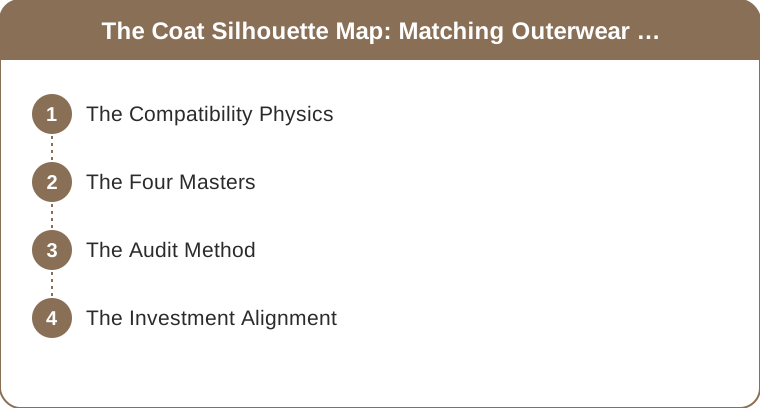
At a glance

Why Do Coats Fit in the Shop and Fail in Winter?

Because of one rule people ignore at the till: the coat must exceed what it covers.

An outer layer that pinches over its contents reads as outgrown and wears miserably. It restricts your arms, it wrinkles at the shoulder blades, and it makes the whole outfit look one size too small — which is a particularly unfair outcome for the most expensive garment you own.

The second half of the rule is the one-volume logic:

  • Fitted coat → slim column underneath (fine knit, straight or slim trousers)
  • Volume coat → fitted base (the coat is doing the shape work; don’t add more)
  • Volume over volume → only with a deliberate proportion break, like an ankle-baring hem or a defined waist

Volume fighting volume is what produces the “wearing a duvet” effect. One layer gets to be big. The others get out of its way.

What Are the Four Main Coat Silhouettes?

Four shapes cover essentially every closet, and most wardrobes only need two.

1. The tailored straight. The classic. Follows the body loosely without hugging it, hits at or just below the knee, works over slim-to-medium contents. This is the office register and the most formal of the four. It’s also the least forgiving of thick knitwear.

2. The cocoon. Volume by design — rounded through the body, narrowing to the hem, usually with a dropped or soft shoulder. Carries chunky knits effortlessly, which is its whole point. It wants slimmer legs beneath to balance the top-heavy shape.

3. The belted wrap. The adjustable one. The same coat resizes by how you tie it — loose over a jumper, cinched over a dress. Its flexibility makes it the strongest single-coat choice for someone who can only own one. The belt does require actually tying it; worn open it loses most of its shape.

4. The oversized straight. The current-decade default. Big shoulders, straight body, generous everywhere. It carries anything underneath and its only real demand is intention in the styling — worn thoughtlessly it reads as borrowed rather than chosen. Pair it with something fitted or something short below.

The Coat Silhouette Map: Matching Outerwear Shape to What's Underneath

5 Mistakes Everyone Makes Buying Outerwear

1. Coat shopping in a t-shirt. This is how the February pinch happens. You need to try it on over the bulkiest thing you’ll realistically wear underneath — and if you’re shopping in September, that means bringing a jumper with you.

2. Buying the coat that fits over nothing you own. A beautiful slim coat is a mis-purchase at any discount if your entire winter wardrobe is cable knits. The coat has to fit the closet, not the fantasy.

3. Forgetting the arms. Cross your arms in front of your chest in the fitting room. Reach forward as if for a steering wheel. If the back pulls, it’s too small — that motion is the one you make constantly and it’s where seams eventually give out.

4. Ignoring the shoulder line. A dropped shoulder on a cocoon coat is design; a dropped shoulder on a tailored straight is bad fit. Know which one you’re looking at.

5. Owning two coats of the same silhouette. If you have two tailored straights, you have one coat and a spare. Two different shapes — say, a tailored straight and an oversized — cover far more situations for the same money.

How Do You Audit Your Closet Before Buying?

Inventory your winter uniform first. Open the drawer and look at what you actually wear from December to February.

  • Chunky-knit wardrobe? You need cocoon or oversized capacity. A slim coat will fight you every day.
  • Slim-column wardrobe (fine merino, tailored trousers)? Every silhouette is open to you, including the tailored straight.
  • Mixed? Prioritize the coat that handles your bulkiest regular outfit, since a big coat over a slim base always works but never the reverse.

Run the gap analysis. What outfit are you currently unable to leave the house in comfortably? That gap defines the coat you need, not the one you want.

Test in real conditions. Sit down in it. If you drive, that matters enormously — some cocoon shapes are unwearable behind a wheel. Put your hands in the pockets while wearing gloves. Do up the top button and see whether it strangles you over a scarf.

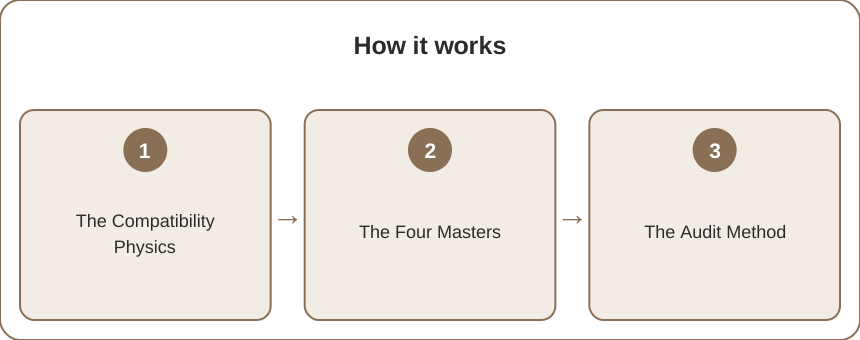
How it works

Does the Silhouette Choice Matter More at Investment Prices?

Considerably more, because the stakes rise with the price.

The coat is the wardrobe’s highest-visibility garment. It’s worn daily for months, it’s the first thing anyone sees, and it appears in essentially every photograph taken of you between November and March. Get the silhouette right and it’s the cost-per-wear champion of your entire closet. Get it wrong and it’s an expensive item you leave on the hook.

So at investment prices, the silhouette maps to your life before it maps to the trend: the commute, the climate, and — most of all — what’s going underneath.

If your winter uniform runs to fitted base layers, a slim column of leggings and a fine knit gives a cocoon or oversized coat the narrow foundation it needs, which is why so many people find those two silhouettes suddenly easy once the layers beneath simplify.

Frequently Asked Questions

Should I size up in a coat to fit layers underneath?

Usually no — size up in silhouette, not in number. A size-up tailored straight gives you a coat with sleeves too long and shoulders too wide, which reads as ill-fitting. A true-to-size cocoon or oversized coat is cut with the extra room built into the right places. Buy the shape that’s designed for layers rather than a bigger version of the shape that isn’t.

Which coat silhouette is the most versatile if I can only own one?

The belted wrap, closely followed by the oversized straight. The wrap adjusts to whatever’s underneath by how tightly you tie it, and it dresses up better than the oversized. If your life skews casual, flip the order.

How many coats does a wardrobe actually need?

Two covers most people: one everyday coat matched to your bulkiest regular outfit, and one that dresses up for smarter occasions. A third is worth it only if you face genuinely severe weather or very different social registers — in which case make it a functional weatherproof one, not a fourth wool coat.


TL;DR:

  • Rule one: the coat must exceed what it covers. Try it on over your thickest jumper
  • Rule two: one-volume logic — fitted coat over slim base, volume coat over fitted base
  • Four master silhouettes: tailored straight, cocoon, belted wrap, oversized straight
  • Most wardrobes need two coats in different shapes, not two of the same
  • Audit what you actually wear in January before buying anything
  • Cross your arms and sit down in the fitting room; both reveal fit failures a mirror hides

The coat was never a standalone purchase — it’s the wardrobe’s roof, and roofs get measured against the house.

Keep Reading

This article is for general styling and informational purposes only. Trends, sizing, availability and pricing may vary by brand and season.

coat silhouettescoat shapesouterwear fit

← All articles