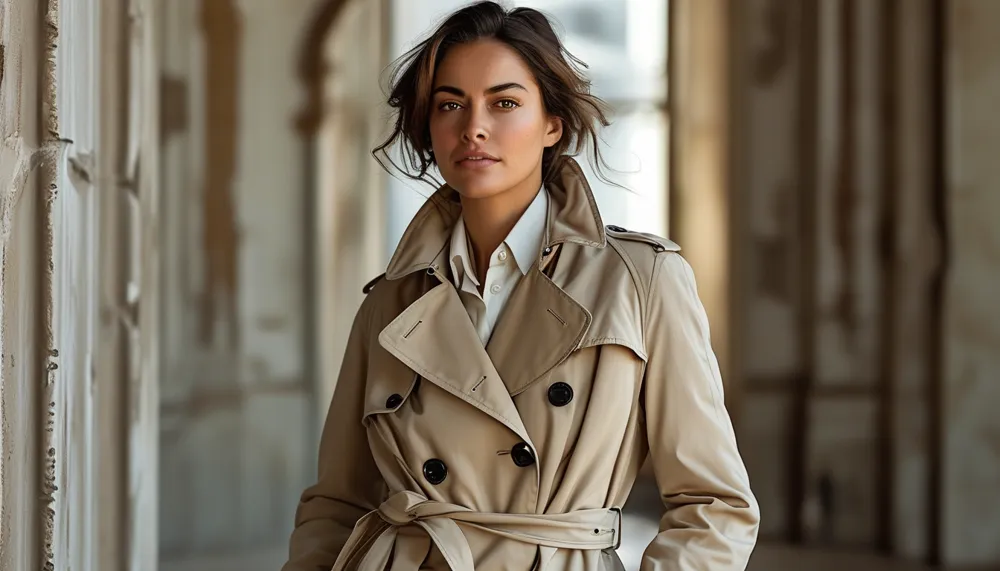
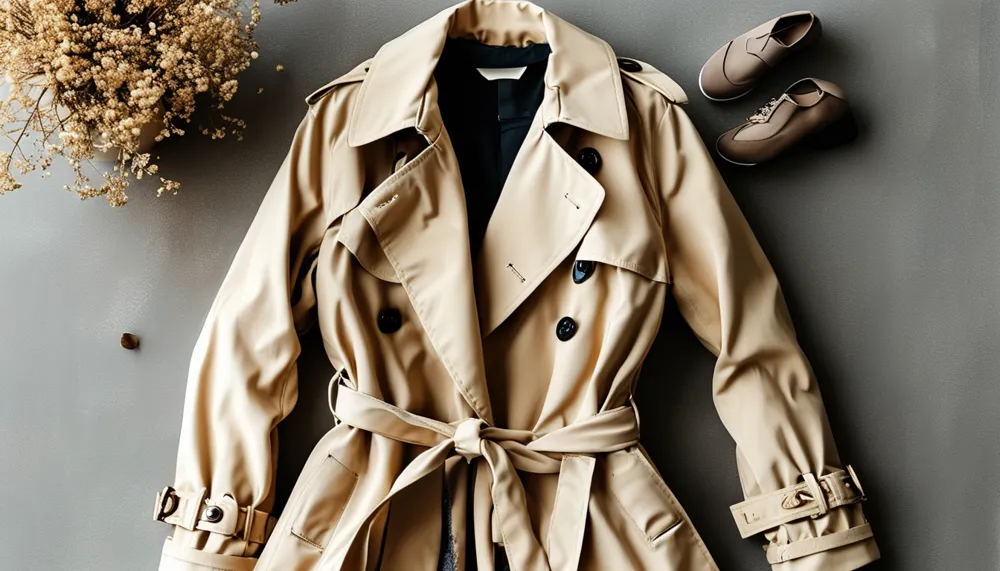
5 Chic Ways to Style a Trench This Season
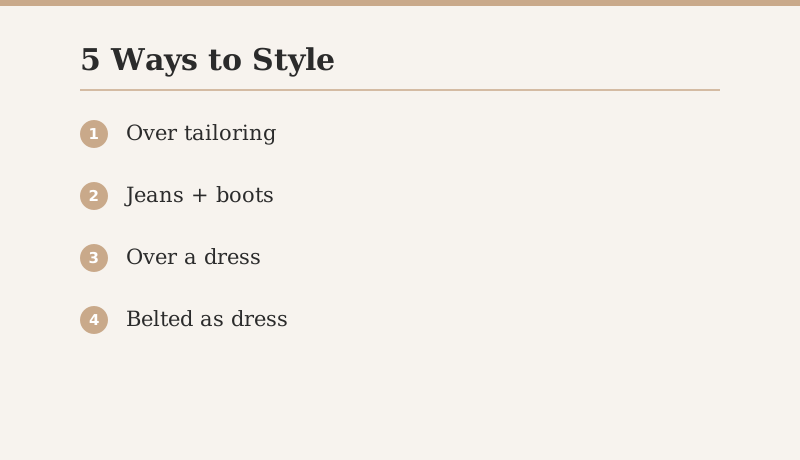
Quick Answer: The five most reliable trench outfits are: over matching tailoring in one tonal family, with straight-leg jeans and ankle boots, over a slip or midi dress, belted as a dress itself, and thrown over a monochrome base with a strong accessory. The rule underneath all five — keep everything beneath it simple and let the coat be the structure.
Your trench has been doing the same job for three years: thrown over whatever, belt tied in a knot, out the door.
It’s a good coat having a very boring life.
The trench is genuinely one of the most versatile pieces in a wardrobe — the problem is that most of us only ever discovered one way to wear it. Here are five, plus the reasoning that makes them work.

1. Over Tailoring
Layer the trench over a matching trouser suit or coordinated separates, and keep everything in one tonal family — camel on cream, navy on navy, all-black.
The reason this reads expensive is that you’ve removed every horizontal break. Nothing interrupts the line from shoulder to hem, so the eye reads one long column. It’s the same principle that makes a monochrome outfit look more considered than a mixed one.
Leave the trench open and let the belt hang or tie at the back. Buttoning it up over tailoring adds bulk exactly where you don’t want it.

2. With Jeans and Boots
Straight-leg jeans, ankle boots, a simple knit, trench over the top. Add a crossbody bag and you’re finished.
This is the workhorse, and it looks effortless because there’s genuinely nothing to it. The trench provides all the structure, so everything underneath can be plain.
Two details do most of the work: the boot should sit close to the ankle rather than slouch (a slouchy boot with a long coat cuts the leg awkwardly), and the jean hem should just skim the boot top. A visible gap of sock is the difference between “put together” and “getting dressed in a hurry.”

3. Over a Dress
A trench over a floaty midi or a slip dress is the definitive transitional-weather outfit — soft underneath, sharp on top.
It’s also the most practical trick in the list, because it takes summer dresses well into autumn. Add opaque tights and a boot and a July dress works in October.
Length matters here more than anywhere else. A trench that ends a few inches above the dress hem looks intentional; one that ends within an inch of it looks like a mistake. If yours falls in that awkward zone, wear it open and let the dress hem show through the front.
4. Belted as a Dress
For the confident version: belt the trench tightly over bare legs with heels or knee-high boots, and nothing much else.
This works best with a longer trench in a fabric with some weight — a lightweight one gapes. Cinch the belt at your natural waist rather than at the coat’s original loop position, which is usually a little low, and make sure the button placket sits flat.
It’s an evening look, and it’s a bold one. Worth having in the arsenal even if you deploy it twice a year.
5. Over a Monochrome Base With One Strong Accessory
The fifth, and the easiest to overlook: an all-one-colour base — black knit, black trousers, black boots, or the cream equivalent — with the trench over it and one deliberate accessory doing the talking.
A red bag. A patterned scarf. Gold hoops. Because the base is uninterrupted and the coat is neutral, a single accessory carries enormous weight, and the whole outfit takes about forty seconds to assemble.
This is the version to keep in your back pocket for days when you have no ideas at all.
What Nobody Tells You About Wearing a Trench
Tie the belt, don’t buckle it. A loose knot at the front or a simple tie at the back looks relaxed and modern. A properly buckled belt reads formal and slightly stiff — which is fine, but it’s a different outfit.
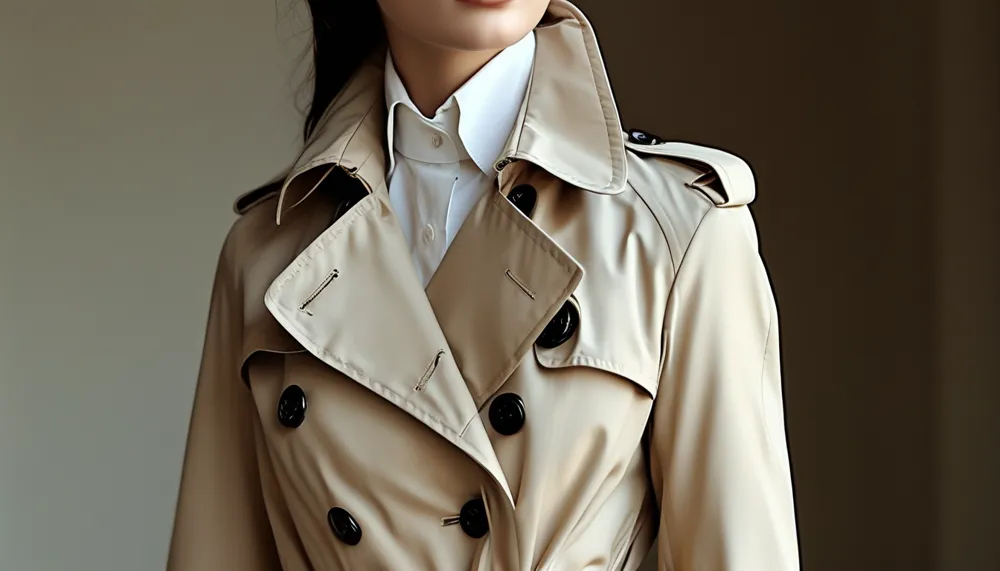
The collar is adjustable, and most people never touch it. Popping it, or folding it down flat and wide, completely changes the mood of the coat. Try both in a mirror.
Sleeve length is worth tailoring. Trench sleeves run long by design, and a two-inch shortening costs very little and transforms how the coat sits. It’s the highest-return alteration on the garment.
Keep the volume balanced underneath. A trench is already a substantial silhouette. Pair it with something fitted or straight below — a wide-leg trouser plus an oversized trench is a lot of fabric, and the outfit stops having a shape.
Beige isn’t the only option, but it is the most useful one. A classic khaki or stone trench works with more of your wardrobe than any coloured version will. If you only own one, own that one.
Mini FAQ
What length trench is most versatile?
Mid-calf or just below the knee. It works over dresses and trousers alike, and it doesn’t fight with boot height. Shorter trenches look sharp with jeans but limit what you can layer over.
Can you wear a trench in winter?
Yes, with layers — a chunky knit or a thin down vest underneath works, as long as you sized the coat with room. Classic trench fabric is water-resistant rather than warm, so it’s really a three-season coat unless you have a lined version.
How do you stop a trench looking frumpy?
Three things: get the sleeves shortened, tie the belt rather than buckling it, and keep what’s underneath fitted. Frumpiness in a trench is almost always a proportion problem, not a coat problem.
TL;DR:
- Over tailoring in one tonal family — no horizontal breaks means it reads expensive.
- Jeans, ankle boots, simple knit — the workhorse. Watch the boot-to-hem gap.
- Over a midi or slip dress with tights and boots to carry summer dresses into autumn.
- Belted as a dress for evening, with a heavier-fabric trench.
- Monochrome base plus one strong accessory when you have no ideas.
- Tie the belt, shorten the sleeves, keep what’s underneath fitted.
Keep Reading
This article is for general styling and informational purposes only. Trends, sizing, availability and pricing may vary by brand and season.