Trench & Coat

The outerwear that defines a season

The Summer Trench: The Unlined Classic for Warm-Weather Drama

2026-07-15

Quick Answer: A summer trench is an unlined or half-lined cotton gabardine coat that weighs about as much as a heavy shirt. Wear it open, belt knotted behind your back, over a slip dress or a tee-and-trouser column. It handles rain, over-air-conditioned offices, and cool coastal evenings without ever reading as a winter coat.

Here’s the thing nobody tells you about the trench: the lining is the seasonal part, not the coat.

The original was cotton gabardine — a fabric invented specifically to be breathable and shed rain at the same time. The heavy wool-lined versions in every department store are the deviation, not the default.

Take the lining out and you’ve got a garment that works in August.

The Summer Trench: The Unlined Classic for Warm-Weather Drama

At a glance

What actually makes a trench a summer trench?

Three things, and only three.

Unlined or half-lined construction. This is the whole ballgame. A half-lined trench has fabric across the shoulders and back only, leaving the sleeves and body single-layer. It cuts the weight roughly in half and lets air move.

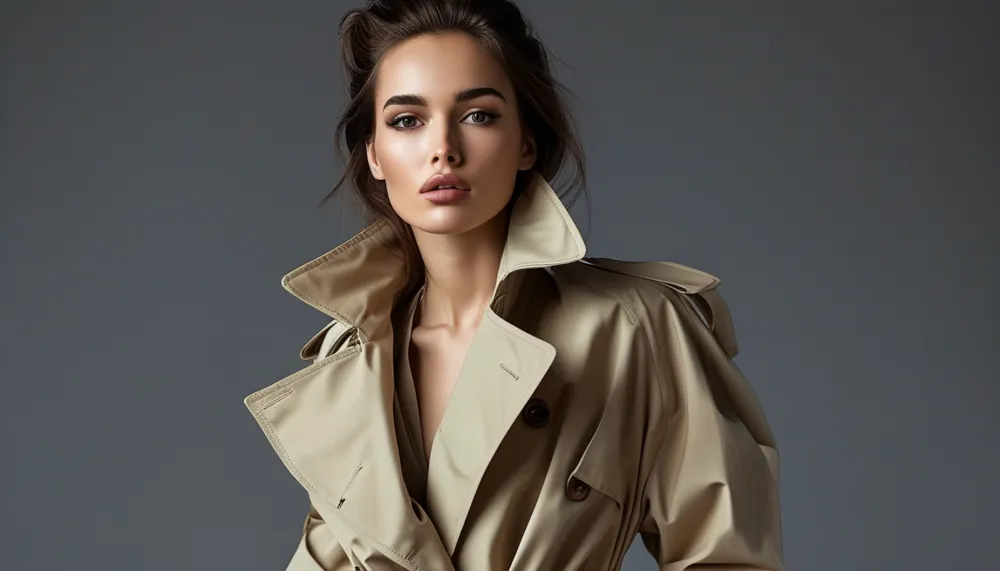
Lighter fabric weight and a relaxed cut. Winter trenches are built with structure — heavy interfacing, a defined shoulder, a body that holds its shape whether you’re in it or not. Summer versions trade that for drape. The coat moves with you instead of standing around you.

Pale colors. Stone, sand, classic khaki. This isn’t a summer-only convention — it was the trench’s original palette, which is why a stone trench looks correct in July and a black one looks like you’re going somewhere serious.

How do you style a summer trench without overheating?

The rule that governs everything: open, never closed.

A belted-shut trench is winter grammar. It traps heat, adds bulk, and reads as outerwear. Summer wears it open with the belt knotted behind the back — the coat becomes a moving vertical frame rather than a closed shell.

From there, four registers:

  • Over a slip dress. The most cinematic outfit available in warm weather. Flow layered over flow, one long unbroken line. Works for evening, works for travel, works when you want to look like you tried without having tried.
  • Over the tee-and-trouser column. A white tee, a linen or soft wide-leg trouser, the trench open over it. The coat does all the work; the outfit underneath is deliberately plain.
  • Belt knotted at the back. Not dangling, not threaded through the loops. Knot it behind you and the coat keeps its waist without closing.
  • Draped over the shoulders in the evening. The trench as cape over a little white dress. Costs nothing, changes everything.

The Summer Trench: The Unlined Classic for Warm-Weather Drama

When does a summer trench actually earn its hanger?

The cool coastal evening. 82°F at 4 p.m. and 63°F by 9. This is the trench’s native habitat.

The rain-forecast city day. Gabardine was built for exactly this. The trench isn’t being fashionable here — it’s doing its actual original job.

The overcooled office. A whole workday spent at 70°F while it’s 90°F outside is functionally two climates. A light trench solves both in one garment instead of two.

Travel. The plane layer that upgrades an arrival. It packs badly and wears well, which is why it belongs on you rather than in the bag.

How it works

5 mistakes everyone makes buying a summer trench

1. Buying a winter trench and calling it seasonal. If it’s fully lined, it’s a coat with a summer color. The test below sorts this out in three seconds.

2. Ignoring the sleeve roll. Summer trenches live with the sleeves pushed to the forearm. A stiff lining fights that — it bunches, creases, and slides back down every ten minutes. Try the roll in the store.

3. Going too short. Cropped trenches fight with the shorter hems underneath and chop the line in half. Classic knee-length flows over a slip dress; a cropped version argues with it.

4. Choosing black. Black gabardine in July absorbs heat and reads formal. Stone and sand do the same job at a lower temperature, literally.

5. Treating it as precious. This is the mistake that costs the most wear. Cotton gabardine handles a gentle machine wash — it works harder and cleans easier than its winter sibling. A coat you’re afraid to wear in the rain is a coat you’ll never wear.

The three-second buying test

The weight test. Hold it over your arm. It should feel like a heavy shirt, not a light coat. If your arm registers “coat,” it’s the wrong one.

The roll test. Push a sleeve up to the elbow. Does it stay, or does it slide and crease? Stay means you’ll actually wear it.

The drape test. Hang it open on your shoulders and look at the front edges. They should fall in a soft vertical line, not stand out stiffly. Drape is what makes an open coat look intentional instead of unbuttoned.

For the layer underneath, the same logic applies: soft, unstructured pieces that move. A knit tank with a pair of buttery-soft high waist yoga pants under an open stone trench is genuinely the least-effort, highest-return outfit of late summer, and it survives the walk, the AC, and the evening cool-down without a single change.

Frequently Asked Questions

Can you wear a summer trench in actual rain?

Yes — cotton gabardine is water-resistant by construction, which is the reason the trench exists. It’s not a waterproof shell in a downpour, but for a normal city rain it’s better than most jackets and considerably better dressed.

What’s the difference between unlined and half-lined?

Unlined has no interior fabric at all, so seams are finished and visible inside — lightest option, most casual. Half-lined has lining across the shoulders and upper back only, which makes it hang better and slide over knits more easily. Half-lined is the better all-rounder.

How do I keep an open trench from looking sloppy?

Knot the belt behind your back rather than letting it hang, and keep the collar flat or popped deliberately — the in-between half-flipped collar is what reads as careless. Those two moves cover it.

Is a summer trench worth it if I already own a winter one?

If you live somewhere with real summer humidity or an aggressively air-conditioned office, yes — they’re genuinely different garments doing different jobs. If your summers are mild and short, wear the winter one open and skip the second purchase.

TL;DR:

  • The lining is the seasonal part, not the trench itself — unlined or half-lined cotton gabardine works in August.
  • Wear it open, belt knotted behind the back. Belted shut is winter grammar.
  • Best over a slip dress or a tee-and-trouser column; draped over shoulders for evening.
  • Stick to stone, sand, khaki — the trench’s original palette and the cooler one.
  • Buy by the weight test (heavy shirt, not light coat) and the sleeve-roll test.
  • Classic knee length flows best over summer’s shorter hems; cropped chops the line.
  • Cotton gabardine machine-washes gentle — wear it in the rain, that’s the point.

Keep Reading

This article is for general styling and informational purposes only. Trends, sizing, availability and pricing may vary by brand and season.

summer trenchunlined trenchlightweight trench

← All articles