The Wool Coat: Buying the Decade Piece and Knowing Quality Before the Price Tag
Quick Answer: Check the composition label first — you want 70% wool minimum for real warmth and drape, and anything under 50% is a polyester jacket wearing a wool costume. Then check the shoulders (they must sit right; that’s the one thing tailors can’t fix cheaply), the lining (full, not half), and whether the cloth springs back when you crush it in your fist. Camel, navy, or charcoal in a single-breasted straight cut will outlast every trend for a decade.
Price tells you almost nothing about a coat. There are £600 coats that are 45% polyester and £180 coats that are pure lambswool with a full lining. The tag is a marketing decision; the label inside the collar is a fact.
The good news is that the checks that actually matter take about ninety seconds each, and you can do all of them standing in a shop.

Why Is the Wool Coat Worth Investing In?
Because the cost-per-wear math isn’t close.
A winter coat gets worn daily for four or five months a year. Call it 120 wears per season. Over a decade, that’s more than a thousand wearings from a single garment — a denominator nothing else in your closet comes near. A £500 coat worn that way costs about 50p a wear. A £60 coat replaced every two seasons costs more and looks worse the entire time.
There’s a second argument that matters more in practice: the coat is the outfit all winter. Whatever you carefully assembled underneath is invisible from October to March. People see the coat, and quality reads at a glance from twenty feet — in the way the cloth hangs, in whether the shoulders sit clean, in whether the hem falls straight or ripples.
So it’s the investment piece with the strongest case: worn most, seen first, and genuinely capable of lasting ten-plus years if the cloth is good and the cut is timeless.

How Do You Tell If a Wool Coat Is Good Quality?
Six checks, in order of how much they tell you.
1. Read the composition label. This is the single most informative thing you can do, and most shoppers skip it.
- 70–100% wool: the real thing. Warm, drapes properly, ages well.
- Cashmere blends (10–30% cashmere): softer hand, slightly less durable, noticeably more expensive
- 50–70% wool: acceptable, warmth drops off, tends to hold shape less well
- Under 50% wool: a polyester coat with wool in it for the label. It won’t be warm, and it’ll pill.
2. Assess the weight and hand. Pick the coat up off the rail. It should feel substantial but not stiff — a good coating wool has body without feeling like cardboard. Then let it hang: does it fall in clean vertical lines, or does it stick out?
3. Do the crush test. Grab a fistful of the cloth, squeeze hard for five seconds, release. Good wool springs back with only faint creasing. Poor blends stay wrinkled — and that’s exactly what your coat will look like after an hour sitting in a car.
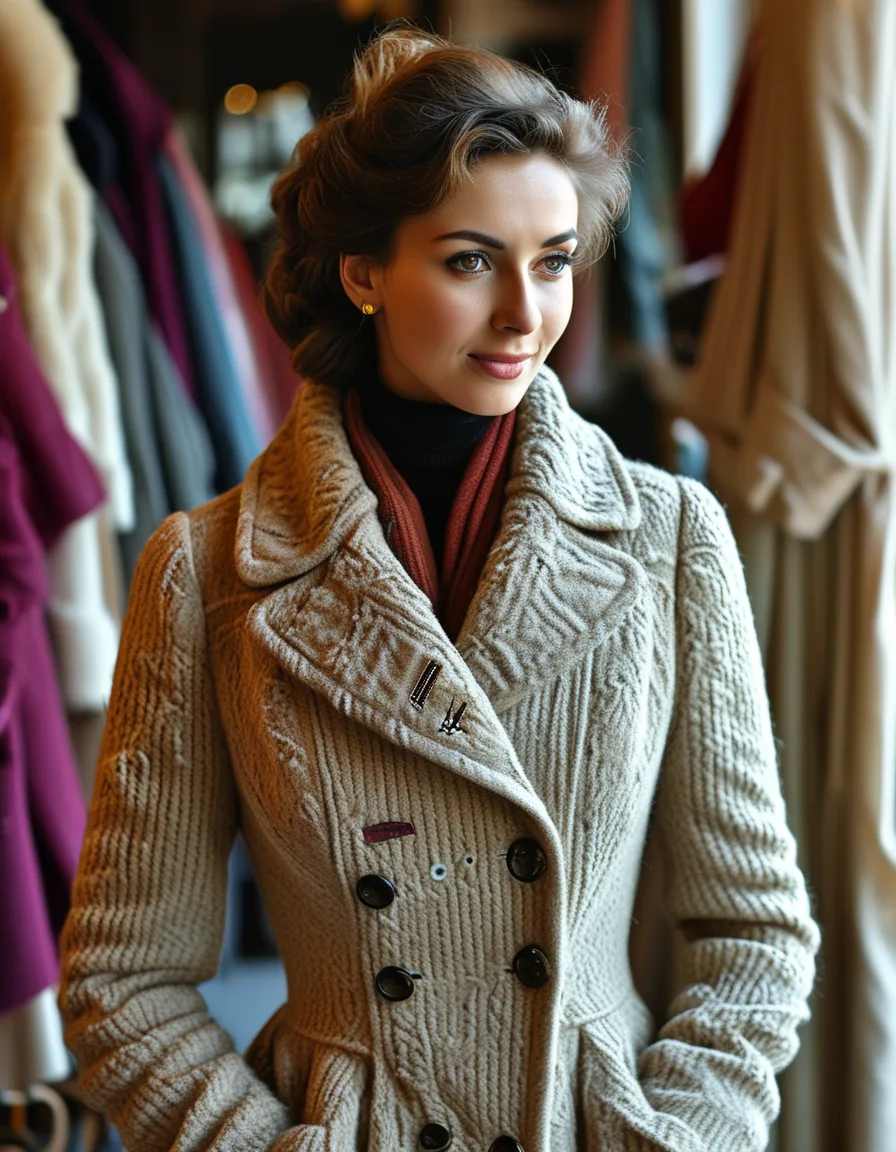
4. Check the construction. Is it fully lined, or lined only to the waist? Full lining means warmer, better drape, and a coat that slides on over knitwear. Are the seams straight and generous? Are the buttons anchored with a shank and a thread stem rather than sewn flat? Are the buttonholes clean rather than fraying already?
5. Check the lapel roll. Press the lapel — does it have a soft internal body that rolls, or does it feel flat and glued? Fused interfacing is normal at most price points; a canvassed lapel is a genuine quality signal and rare below the top tier.
6. Look at pattern matching. On checks, herringbone, or plaid, do the patterns line up across the seams and at the pockets? Matched patterns waste fabric, so nobody does it by accident. It’s the clearest single tell that a maker cared.
5 Mistakes Everyone Makes Buying a Wool Coat
1. Trying it on over a t-shirt. You’ll wear this coat over a chunky knit in February. Try it on over one, or at least over a jumper. Coats that fit perfectly in a tee pinch across the back in real life.
2. Buying for the shoulders you wish you had. Shoulders are the one thing that must fit off the rack. Sleeves can be shortened, waists can be taken in, hems can be raised — shoulder alterations are expensive and often impossible.
3. Ignoring how you actually live. If you drive everywhere, a floor-length coat is a daily annoyance and will wrinkle across the back. If you walk 25 minutes to a station in the wind, a cropped coat is a mistake. Buy for the commute you have.
4. Chasing the trend cut. The dramatically oversized shoulder or the season’s novel lapel dates fastest. A single-breasted straight coat has been correct for eighty years and shows no interest in stopping.
5. Paying full price in November. Coat prices fall hard in January, and the secondhand market is full of quality-era wool at a quarter of the original — often better cloth than new coats at the same money.
Which Wool Coat Style Should You Choose?
Silhouette. The single-breasted straight is the most timeless and the most versatile — it works over tailoring and over jeans. The double-breasted reads more formal and more structured. A wrap coat is the softest and most forgiving, though the belt is a commitment. Choose against the wardrobe you actually own, not the one in the photo.
Color. Camel, navy, charcoal, and black are the core four. Camel is the most elevating — it makes everything under it look more expensive and photographs beautifully — while charcoal and navy are the most practical for daily city wear. A statement-color coat (forest green, burgundy, rust) is a fine second coat and a risky only coat.
Length. Knee-range is the default for a reason: it covers most of what’s underneath, works with trousers and dresses, and doesn’t fight with sitting down. Shorter suits petite frames and cycling; longer suits taller frames and genuinely cold climates.
Fit protocol. Shoulders first. Then check you can cross your arms in front without straining. Then check the sleeve ends at your wrist bone with a knit underneath. Then look at the back for pulling at the shoulder blades.
Practical note for the in-between weather at either end of the season: a coat that layers cleanly over a slim base — a fine knit and high waist leggings or narrow trousers — extends its wearing window by weeks at both ends.
Frequently Asked Questions
Is a cashmere coat worth the extra money?
For softness and hand, yes. For durability, no — pure cashmere pills and wears faster than wool, so a 10–20% cashmere blend usually gives the best of both. If you want one coat to survive a decade of daily wear, a high-percentage lambswool or a wool-cashmere blend beats pure cashmere.
How do you care for a wool coat so it lasts?
Brush it with a clothes brush after wearing to lift dirt before it settles, hang it on a broad wooden hanger (never a wire one), and dry clean only once or twice a season — over-cleaning strips the natural lanolin. Air it out overnight rather than cleaning it after every few wears, and store it in a breathable garment bag with cedar over summer.
Can you find a genuinely good wool coat under £200?
Yes, in two places: end-of-season sales in January and February, and the secondhand market. Vintage coats from the 1980s and earlier were routinely made from 100% wool with full linings, and they turn up regularly for £40–£80. Check for moth holes at the shoulders and under the arms before buying.
TL;DR:
- Read the label first: 70%+ wool is the floor; under 50% is a polyester jacket in costume
- Crush test the cloth — good wool springs back, poor blends stay creased
- Full lining, anchored buttons, straight seams, matched patterns at seams = a maker who cared
- Shoulders must fit off the rack. Everything else can be altered
- Try it on over a real winter knit, not a t-shirt
- Single-breasted straight, knee-length, in camel or your core neutral = the decade coat
- Buy in January or secondhand for quality-era wool at a fraction of the price
Keep Reading
This article is for general styling and informational purposes only. Trends, sizing, availability and pricing may vary by brand and season.